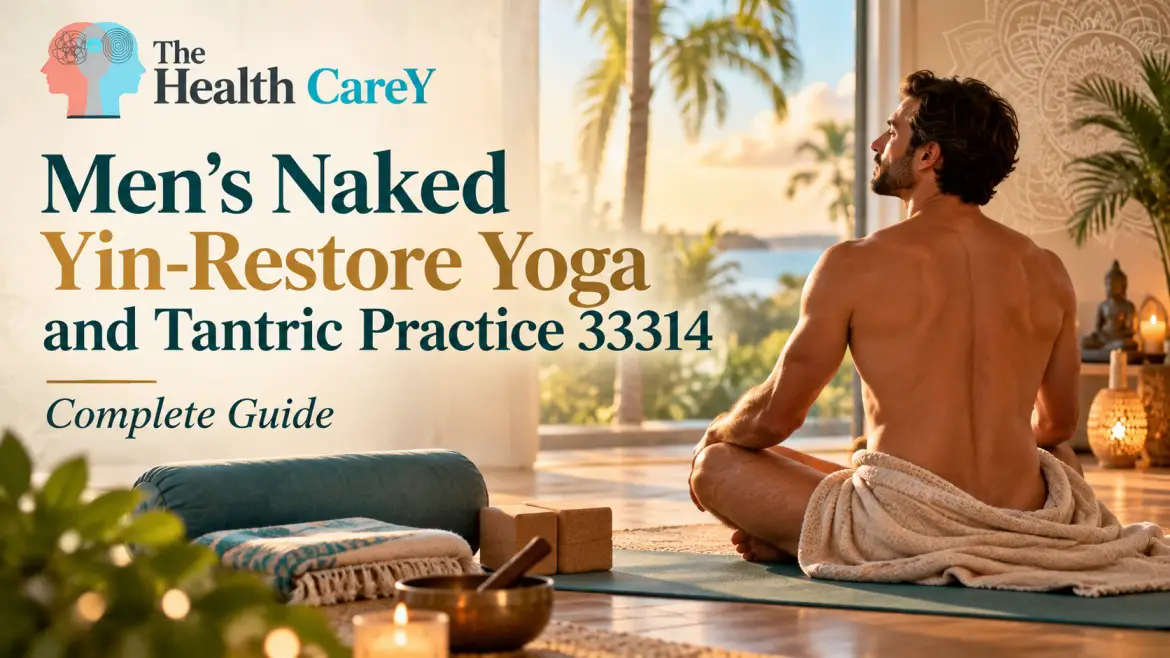
“Men’s naked yin-restore yoga and tantric practice 33314” is an unusually specific search phrase combining several different concepts:
- Men’s yoga
- Clothing-optional or naked yoga
- Yin yoga
- Restorative yoga
- Tantric-inspired practice
- ZIP code 33314 in the Fort Lauderdale/Davie area of Florida
It is important to understand that this is not the name of one standardized or historically recognized school of yoga.
Instead, the phrase appears to describe a modern wellness format that may combine slow yoga postures, supported rest, breath awareness, meditation, body awareness, and—in some settings—clothing-optional practice specifically for men.
The “33314” portion refers to a geographic area around Fort Lauderdale and Davie in Broward County, Florida, rather than to a yoga pose, tantra technique, spiritual number, or traditional sequence.
These practices can overlap, but they are not identical.
Yin yoga and restorative yoga have different intentions. Tantra is far broader than sexuality. Nudity is not required for any of these traditions. And while yoga has evidence supporting some benefits for general wellness, stress, sleep, balance, and certain health concerns, claims about “stored trauma in fascia,” hormonal optimization, energy cleansing, or guaranteed emotional release should be treated cautiously.
Quick Answer
Men’s naked yin-restore yoga and tantric practice generally refers to a slow, body-aware yoga practice for men that may be clothing optional and may combine:
- Long-held yin-inspired postures
- Fully supported restorative poses
- Slow breathing
- Meditation
- Body awareness
- Mindfulness
- Tantric-inspired attention practices
- Periods of stillness
The “33314” in the phrase refers to the 33314 ZIP code in South Florida, including Fort Lauderdale/Davie.
It is not a recognized yoga certification or ancient tantric term.
A reputable class should also be:
- Explicitly non-sexual if presented as a wellness class
- Consent-based
- Clear about nudity being optional or required
- Transparent about touch
- Private
- Free from photography
- Led by an appropriately trained instructor
- Open about health and safety considerations
What Does “Men’s Naked Yin-Restore Yoga and Tantric Practice 33314” Actually Mean?
Breaking the phrase apart makes it much easier to understand.
Men’s
The class or practice is designed specifically for men.
A men’s-only environment may appeal to people who prefer:
- A male peer group
- A body-positive environment
- Less performance pressure
- A quieter wellness setting
- Community with other men
There is no medical requirement that yin or restorative yoga be separated by gender.
Men’s classes are a preference or community format rather than a distinct physiological form of yoga.
Naked
“Naked yoga” usually means practicing yoga without clothing or in a clothing-optional environment.
This is a modern format rather than an essential component of yin yoga, restorative yoga, or Tantra.
Some practitioners say it helps them focus on:
- Body acceptance
- Reduced self-consciousness
- Direct body awareness
- Freedom of movement
Those experiences are personal.
There is not strong scientific evidence showing that doing yoga naked produces health benefits beyond those associated with yoga itself.
Yin
Yin yoga is a slow style of modern postural yoga in which poses are typically held for longer periods with relatively little muscular effort.
A medically reviewed WebMD overview of Yin Yoga describes it as a slower practice involving passive postures that may be held for several minutes.
Restore
“Restore” usually refers to restorative yoga, although “yin-restore” itself is not one universally standardized yoga category.
Restorative yoga typically uses:
- Bolsters
- Blankets
- Blocks
- Straps
- Chairs
- Walls
to support the body comfortably so muscular effort can be reduced.
Tantric Practice
Tantric elements may include:
- Meditation
- Breath awareness
- Mantra
- Visualization
- Attention to bodily sensation
- Ritual
- Contemplative practices
Tantra should not automatically be equated with sexuality.
Academic scholarship describes Tantra as a highly diverse family of Hindu and Buddhist traditions rather than simply a sexual practice. The Oxford Research Encyclopedia of Religion specifically notes that Western associations between Tantra and sexuality represent only a narrow and often misunderstood view of much larger religious traditions.
33314
33314 is a South Florida ZIP code associated with Fort Lauderdale and Davie in Broward County.
The number has no established relationship to:
- Chakras
- Numerology within this practice
- Tantra
- Yoga philosophy
- A breathing count
- A sequence of poses
In this search phrase, it functions as a location modifier.
Is “Yin-Restore Yoga” a Recognized Yoga Style?
Not exactly.
Yin yoga and restorative yoga are established modern practice categories, but they are different.
A teacher may combine them in one class and call the result:
- Yin-Restore
- Yin & Restore
- Yin-Restorative
- Restorative Yin
Those names describe a hybrid class rather than one historically standardized tradition.
Yin Yoga vs. Restorative Yoga
The two styles often look similar because both can involve stillness and long-held postures.
Their purpose, however, is different.
| Feature | Yin Yoga | Restorative Yoga |
|---|---|---|
| Main intention | Sustained, relatively passive loading and stillness | Comfort and supported rest |
| Muscular effort | Generally low | Minimal |
| Sensation | Mild-to-moderate stretch or tension may occur | Ideally very comfortable |
| Props | Optional but often useful | Usually central |
| Typical hold | Often several minutes | Often longer |
| Goal | Stillness, mobility, awareness | Rest, relaxation, reduced effort |
| Discomfort expected? | Mild appropriate sensation may occur | Significant discomfort is not the goal |
A detailed Yoga Journal comparison of Yin and Restorative Yoga explains that yin intentionally applies sustained stress within an appropriate range, whereas restorative yoga uses props to support the body and minimize effort.
That difference matters.
A pose should not be pushed aggressively simply because a class is called “yin.”
What Happens in Yin Yoga?
A yin practice typically includes floor-based postures that are held for several minutes.
Common areas emphasized include:
- Hips
- Glutes
- Inner thighs
- Hamstrings
- Lower back
Rather than repeatedly moving in and out of a pose, the practitioner remains relatively still.
Breathing is generally natural and calm.
The aim is not to reach the deepest possible position.
Instead, practitioners are usually encouraged to stop at an appropriate level of sensation and allow time to pass without forcing greater range.
What Happens in Restorative Yoga?
Restorative yoga takes an even more supported approach.
Instead of using time primarily to sustain a stretch, props are arranged so that the body can remain comfortable with minimal effort.
A class may use:
- Bolsters beneath the knees
- Blankets beneath the head
- Blocks beneath bolsters
- Straps around the legs
- A wall for leg support
A restorative session may contain relatively few postures because each one can be maintained for an extended period.
What Does Tantra Have to Do With This Practice?
This is where modern wellness language can become confusing.
Tantra encompasses historical Hindu and Buddhist traditions involving many forms of practice, including:
- Ritual
- Meditation
- Mantra
- Visualization
- Deity practices
- Breath
- Subtle-body concepts
- Contemplation
It cannot accurately be reduced to “sexual energy.”
As the Oxford Research Encyclopedia of Religion explains, tantric traditions are extremely diverse and their widespread modern association with sexuality does not adequately represent their historical scope.
A modern yoga teacher who says a class includes “tantric elements” might simply mean it includes:
- Conscious breathing
- Present-moment awareness
- Meditation
- Nonjudgmental observation of sensation
- Mantra
- Visualization
Ask the teacher exactly what the term means in that particular class.
Is Tantric Yoga Sexual?
Not necessarily.
This is one of the most common misconceptions about Tantra.
Some modern Western systems—often called Neo-Tantra—do place significant emphasis on intimacy and sexuality.
Historical tantric traditions are much broader.
Therefore:
Tantric practice ≠ automatically sexual practice.
Likewise:
Naked yoga ≠ automatically sexual yoga.
A men’s naked yoga class can be entirely non-sexual.
If a class includes sexual or intimate exercises, the organizer should disclose that clearly before attendance rather than presenting it ambiguously as ordinary yoga.
Why Would Someone Practice Yoga Naked?
People choose clothing-optional yoga for different reasons.
Commonly reported motivations include:
- Body acceptance
- Naturism
- Reduced concern about appearance
- Curiosity
- Comfort
- Community
- Greater awareness of physical sensations
Some people also say practicing without clothing challenges shame or self-consciousness about their bodies.
These experiences can be personally meaningful, but they should not be exaggerated into medical claims.
There is little evidence that removing clothing itself:
- Changes testosterone levels
- Releases trauma
- Detoxifies the body
- Alters hormones
- Produces superior flexibility
The potential benefits primarily come from the broader movement, breathing, mindfulness, and relaxation practice.
Is Naked Yoga Good for Body Image?
It may be a positive experience for some people and an uncomfortable experience for others.
A supportive clothing-optional environment may help some participants become less judgmental about normal variations in:
- Body size
- Body hair
- Scars
- Aging
- Muscle definition
- Skin
- Genital appearance
However, people with significant body-image distress do not need to practice nude yoga to improve body acceptance.
If body dissatisfaction causes persistent distress or affects daily functioning, it may be helpful to speak with a qualified professional. Our guide to what clinical mental health counseling is explains how counseling can address emotional and behavioral concerns without framing them as personal weakness.
Does Yin Yoga “Release Stored Emotions From the Fascia”?
This popular claim needs clarification.
People absolutely can experience emotions during yoga.
Long periods of stillness may give someone more opportunity to notice:
- Memories
- Stress
- Sadness
- Anxiety
- Relief
- Physical tension
That does not establish that emotions are literally stored in fascia and physically released from connective tissue during a pose.
There is currently no strong scientific basis for describing fascia as a biological storage location for unresolved emotions in the literal way commonly claimed in wellness marketing.
A better explanation is that slow practices may increase interoceptive awareness—attention to sensations occurring inside the body—and provide time for thoughts and emotions to become noticeable.
Can Yoga Help With Stress?
Yes, there is better evidence here.
The U.S. National Center for Complementary and Integrative Health reports that yoga may help:
- Reduce stress
- Support general wellness
- Improve some aspects of emotional well-being
- Improve sleep
- Improve balance
You can review the evidence in the NCCIH guide to yoga effectiveness and safety.
Yoga should still be considered a complementary wellness practice rather than a replacement for appropriate treatment when someone has significant mental or physical health problems.
For more context about mental wellness, see our guide on what mental health means.
Can Yin or Restorative Yoga Improve Flexibility?
Yoga practice can support flexibility and mobility.
However, flexibility gains depend on:
- Frequency
- Duration
- Individual anatomy
- Existing mobility
- Injury history
- Age
- Type of practice
Longer is not automatically better.
Forcing joints deeper into end-range positions because a pose is being held for several minutes can increase injury risk.
A broader understanding of flexibility, endurance, strength, and other fitness components is covered in our guide on what physical fitness is.
Does Restorative Yoga “Activate the Parasympathetic Nervous System”?
Relaxing yoga practices may be associated with physiological changes consistent with relaxation.
However, wellness articles sometimes oversimplify this by saying that one pose instantly “switches on the parasympathetic nervous system.”
Your autonomic nervous system is more complex than an on/off switch.
Slow breathing, comfortable rest, and a quiet environment can support relaxation, but phrases such as “complete nervous system reset” are marketing language rather than a precise medical description.
Does This Practice Increase Testosterone?
There is not good evidence supporting claims that men’s naked yin or restorative yoga reliably increases or “regulates” testosterone.
Testosterone levels are affected by many factors, including:
- Age
- Sleep
- Body composition
- Certain illnesses
- Medications
- Hormonal disorders
A yoga session should not be promoted as a treatment for low testosterone without appropriate evidence.
Anyone concerned about testosterone should discuss testing and symptoms with a healthcare professional rather than relying on yoga claims.
Does Naked Yoga Improve Masculinity?
There is no medical definition of “masculine energy” that can be measured through yoga.
Some men’s wellness groups use terms such as:
- Masculine presence
- Sacred masculine
- Embodied masculinity
- Masculine energy
These are philosophical or personal-development ideas rather than established medical concepts.
They may be meaningful within a particular community, but they should not be presented as measurable physiological states.
Can Men Benefit From Slower Yoga?
Absolutely.
Many men approach exercise primarily through:
- Resistance training
- Running
- Cycling
- Competitive sports
- High-intensity workouts
A slower yoga practice can provide a very different experience.
It may help someone spend time working on:
- Mobility
- Body awareness
- Slower breathing
- Stillness
- Recovery
- Relaxation
NCCIH notes that yoga may support general wellness and improve some aspects of balance, sleep, stress management, and emotional health.
Men do not need to be flexible before starting yoga.
What Does a Typical Yin-Restore Session Look Like?
There is no standardized session, but a non-sexual class might follow a structure like this.
1. Arrival and Grounding
The practice may begin with:
- Comfortable seated posture
- Lying down
- Natural breathing
- Body awareness
The purpose is simply to shift attention away from outside activity.
2. Gentle Mobility
Some teachers may introduce small movements involving:
- Spine
- Hips
- Shoulders
- Neck
The goal is not an intense warmup.
3. Yin-Inspired Postures
The class may then move into longer-held floor poses.
Examples might include variations of:
- Butterfly
- Caterpillar/seated forward fold
- Dragon
- Shoelace
- Sphinx
- Reclining twist
The appropriate pose varies by individual.
4. Restorative Postures
Later in the class, the emphasis may shift toward completely supported positions.
Examples include:
- Supported child’s pose
- Reclined butterfly with bolsters
- Supported bridge
- Legs supported on a chair
- Supported savasana
5. Breath or Meditation
A teacher may include:
- Natural breath awareness
- Slow diaphragmatic breathing
- Meditation
- Body scan
- Mantra
6. Final Rest
A longer savasana or supported resting posture may end the practice.
What Does a “Tantric” Element Look Like in a Class?
This varies dramatically.
It might involve:
- Breath awareness
- Meditation
- Mantra
- Visualization
- Observing bodily sensation
- Awareness of attention
- Symbolic language involving energy
A reputable teacher should explain what they mean by Tantra.
Vague promises involving:
- Energy activation
- Instant kundalini awakening
- Sexual healing
- Hormonal transformation
- Trauma removal
deserve extra scrutiny.
Does Tantric Breathwork Require Special Caution?
Yes.
Not all breathwork is the same.
Gentle awareness of natural breathing is generally very different from aggressive practices involving:
- Rapid breathing
- Long breath retention
- Hyperventilation
- Extreme breath holds
The NCCIH yoga safety guidance advises beginners to avoid extreme practices, including forceful breathing, unless appropriately guided.
People with cardiovascular, respiratory, neurological, or other medical conditions may require modifications.
What Should “Naked” Mean in a Reputable Class?
This should be absolutely clear before you arrive.
A class may be:
- Fully nude
- Clothing optional
- Underwear optional
- Nude only within the practice space
There should be no surprises.
A reputable organizer should disclose the clothing policy on the registration page or during an introductory conversation.
Consent Is Essential
Clothing-optional wellness environments require stronger—not weaker—boundaries.
Participants should know:
- Whether physical adjustments occur
- Whether partner exercises occur
- Whether touch is optional
- How consent is requested
- Whether participants can decline without explanation
Silence should never be treated as consent.
Someone should always be able to say:
- No
- Stop
- I don’t want an adjustment
- I prefer no touch
- I want to leave
without pressure.
What About Teacher Adjustments?
Some yoga teachers use hands-on adjustments.
In a nude or clothing-optional environment, explicit consent becomes particularly important.
A strong policy may use:
- No-touch classes
- Consent cards
- Verbal permission
- Opt-in systems
You should know the policy before class starts.
Privacy Should Be Non-Negotiable
A reputable naked yoga environment should have strict rules concerning privacy.
Look for policies such as:
- No photography
- No video
- No recording
- No phones in the practice area
- No identifying other attendees publicly
- Secure changing arrangements
You should never be photographed nude without explicit, informed permission.
Is Naked Yoga Safe?
The physical risks are broadly similar to other forms of yoga.
NCCIH states that yoga is generally considered safe for healthy people when practiced appropriately under qualified guidance, but injuries can occur.
Common yoga injuries include:
- Sprains
- Strains
Areas requiring caution may include:
- Knees
- Hips
- Lower back
- Neck
- Shoulders
NCCIH recommends qualified instruction and appropriate modifications, particularly for people with health problems.
Read the full NCCIH yoga safety guidance.
Who Should Be Cautious With Yin Yoga?
Speak with an appropriate healthcare professional or qualified instructor before beginning if you have:
- Recent surgery
- Joint instability
- Significant osteoporosis
- Acute injury
- Herniated disc or serious back problems
- Major hip or knee problems
- Balance problems
- Severe uncontrolled high blood pressure
- Certain eye conditions
Pregnant people and older adults may also need pose modifications.
Pain Is Not the Goal
A yin pose may create noticeable sensation.
It should not create:
- Sharp pain
- Burning pain
- Numbness
- Tingling
- Electric sensations
- Sudden joint pain
Stop or modify the posture if these occur.
“Breathe through the pain” is not a good universal rule.
Is Deep Stretching Better?
No.
Greater range of motion is not automatically healthier.
Every person has different:
- Bone structure
- Joint shape
- Ligament laxity
- Muscle length
- Injury history
Some limits cannot—and should not—be stretched away.
A competent teacher should encourage individual positioning rather than forcing everyone into identical shapes.
Do You Need to Be Flexible?
No.
People often avoid yoga because they believe flexibility is a prerequisite.
It isn’t.
Yoga is a practice, not a flexibility test.
Props and modifications can make poses accessible to people with different mobility levels.
Do You Have to Be Naked?
Only if the specific organizer requires it and you voluntarily choose to attend.
Yoga itself does not require nudity.
If the idea makes you uncomfortable, you can practice:
- Yin yoga in normal clothing
- Restorative yoga
- Meditation
- Breath awareness
and receive the broader benefits of the practice without removing clothing.
Is Naked Yoga Appropriate for Beginners?
It can be, assuming:
- The class welcomes beginners
- The physical practice is appropriate
- Policies are explained
- Boundaries are clear
- Participants can modify poses
However, doing a standard clothed class first may help someone distinguish discomfort with a pose from discomfort with the clothing-optional environment.
What Should You Bring?
Requirements depend on the class.
Common yoga items include:
- Yoga mat
- Towel
- Water
- Bolster
- Blanket
- Blocks
For communal clothing-optional practice, bringing a clean towel to place between your body and shared props can also be sensible from a hygiene standpoint.
Follow the facility’s actual rules.
Hygiene Matters
A nude class should have clear sanitation practices.
Shared equipment should be cleaned appropriately.
Personal hygiene considerations include:
- Showering beforehand when possible
- Using your own towel
- Cleaning your mat
- Covering shared props as requested
Avoid attending communal classes if you have a contagious skin infection or another condition that could reasonably expose others.
What About Erections During Men’s Naked Yoga?
An involuntary erection can occur for many reasons and does not necessarily indicate sexual intent.
In a properly structured non-sexual class, the appropriate response is usually simple discretion rather than shame or attention.
However, deliberate sexual behavior toward other participants is entirely different and should violate a reputable class’s code of conduct.
This is another reason explicit behavior policies matter.
Is the Practice LGBTQ+ Friendly?
That depends on the organizer.
A men’s class may include men of different:
- Sexual orientations
- Gender histories
- Ages
- Body types
- Cultural backgrounds
Do not assume a men’s naked yoga class is a dating or sexual space.
If inclusion is important to you, check the facilitator’s policies before registering.
Is This a Form of Therapy?
Yoga may have therapeutic effects in the everyday sense of feeling calming or supportive.
That is not the same as psychotherapy.
A yoga instructor should not imply that a yoga session replaces treatment for:
- Depression
- Anxiety disorders
- PTSD
- Eating disorders
- Substance-use disorders
- Trauma-related problems
NCCIH notes that yoga may help with some anxiety and depressive symptoms, but evidence varies by condition and it is generally best understood as complementary care.
If emotional difficulties are significantly affecting daily life, our guide on what mental health is explains common warning signs, while clinical mental health counseling describes professional treatment options.
Does Yoga “Heal Trauma”?
This is another phrase that needs care.
Yoga may be used as part of trauma-informed wellness programs.
Some people find body-based practices helpful.
But yoga should not be advertised as a guaranteed cure for trauma.
Trauma can be complex, and appropriate care may involve:
- Psychotherapy
- Medical care
- Psychiatric treatment
- Social support
- Complementary practices
depending on the individual.
What Is Trauma-Informed Yoga?
Trauma-informed yoga emphasizes:
- Choice
- Predictability
- Consent
- Personal agency
- Non-coercive language
- Avoiding unnecessary touch
These principles are especially relevant in a clothing-optional environment.
A teacher calling themselves trauma-informed should be able to explain what training they have completed.
How Does Breathing Fit Into the Practice?
Breath awareness can help anchor attention.
A simple approach may involve noticing:
- Inhalation
- Exhalation
- Movement of the abdomen
- Movement of the ribs
Gentle breathing should not feel:
- Dizzying
- Painful
- Panicky
If a breathing technique causes symptoms, stop.
For additional context on how breathing and stress interact, see our guide on how stress impacts the respiratory system.
Common Myths About Men’s Naked Yin-Restore Yoga
Myth 1: Naked yoga is sexual
Not necessarily.
Many clothing-optional yoga groups explicitly define their practice as non-sexual.
Myth 2: Tantra means tantric sex
No.
Sexual practices exist within some modern interpretations, but Tantra historically encompasses much broader religious and contemplative traditions.
Myth 3: Fascia stores unresolved trauma
This is often presented too literally.
Emotions may arise during movement or stillness, but there is not strong evidence that trauma is physically stored in fascia and released by stretching.
Myth 4: Yin yoga detoxifies the body
Your body already uses organs including the liver and kidneys to process and eliminate many waste products.
Yoga should not be marketed as a special toxin-removal system.
Myth 5: Restorative yoga resets your nervous system
Relaxation can influence autonomic activity, but “nervous system reset” is an imprecise wellness phrase rather than a defined medical outcome.
Myth 6: Naked yoga boosts testosterone
This has not been established.
Myth 7: More stretching is always better
It isn’t.
Excessive stretching can irritate tissues or destabilize already-mobile joints.
Yin-Restore vs. Other Yoga Styles
| Practice | Pace | Typical Effort | Long Holds | Main Emphasis |
|---|---|---|---|---|
| Vinyasa | Moderate-fast | Moderate-high | Rare | Movement and flow |
| Power yoga | Fast | High | Rare | Strength and conditioning |
| Hatha | Moderate | Moderate | Sometimes | Posture and breath |
| Yin | Slow | Low | Yes | Stillness and sustained positions |
| Restorative | Very slow | Very low | Yes | Supported rest |
| Yin-Restore | Slow | Low | Yes | Combination of yin and restorative approaches |
| Tantra-inspired yoga | Varies | Varies | Varies | Awareness, meditation, ritual or subtle-body concepts |
| Naked yoga | Any style | Varies | Varies | Clothing-optional format rather than a distinct yoga methodology |
The last distinction is especially important:
Naked yoga describes what someone is wearing—not necessarily the type of yoga being practiced.
What Is Special About 33314?
From an SEO and search perspective, 33314 appears to indicate local intent.
Someone searching this term may actually be looking for:
- Men’s naked yoga near Davie
- Clothing-optional yoga near Fort Lauderdale
- Men’s yin yoga in Broward County
- Tantric yoga near 33314
- Men’s restorative yoga in South Florida
33314 itself is not part of the yoga technique.
How to Find a Class Near 33314
Because niche classes can open, close, relocate, or change policies, verify current information directly rather than relying on an old directory.
Possible searches include:
- Men’s naked yoga 33314
- Men’s clothing optional yoga Davie FL
- Men’s yin yoga Fort Lauderdale
- Restorative yoga Davie
- Tantra yoga Broward County
- Men’s yoga South Florida
Before attending, speak directly with the organizer.
Questions to Ask Before Booking
Ask:
- Is the class fully nude or clothing optional?
- Is the practice explicitly non-sexual?
- What yoga training does the instructor have?
- What does “tantric” mean in this particular class?
- Is any physical touch involved?
- How is consent handled?
- Are partner exercises included?
- Are phones permitted?
- Is photography prohibited?
- How is participant privacy protected?
- Are beginners welcome?
- What props should I bring?
- What health conditions should I disclose?
- Can I leave or dress at any point?
- Is there a written code of conduct?
Clear answers are a positive sign.
Warning Signs of a Poorly Run Class
Be cautious if an organizer:
- Refuses to explain what happens
- Pressures participants to undress
- Claims nudity is necessary for healing
- Guarantees trauma release
- Promises sexual-energy activation without explaining what that means
- Uses touch without explicit consent
- Encourages secrecy rather than privacy
- Allows unauthorized photography
- Discourages medical treatment
- Claims yoga can cure psychiatric disorders
- Promises hormonal or testosterone changes
- Uses humiliation or pressure
- Cannot explain their training
Feeling uncomfortable is enough reason not to attend.
What Makes a Good Instructor?
Look for someone who:
- Has credible yoga training
- Understands the style being taught
- Encourages modifications
- Respects anatomical differences
- Uses clear consent procedures
- Maintains professional boundaries
- Does not exaggerate health claims
- Explains risks
- Welcomes questions
- Respects privacy
A yoga instructor does not need to pretend to be a therapist or physician to provide a valuable yoga experience.
Can You Practice Yin-Restore Yoga at Home?
Yes.
The clothing-optional component can obviously be practiced privately at home if desired.
A simple home practice may include:
- Comfortable breathing
- Supported butterfly
- Gentle seated forward fold
- Supported sphinx
- Reclined twist
- Legs supported on a chair
- Savasana
Do not force range of motion.
Use enough support to remain comfortable.
Beginners may still benefit from learning basic positioning from a qualified instructor first.
Do You Need Tantra to Practice Yin-Restore Yoga?
No.
Yin and restorative yoga can both be practiced without any tantric component.
Likewise, tantric meditation can be practiced without nudity or yin yoga.
These traditions can be combined, but they are not dependent on one another.
Do You Need Nudity to Practice Tantra?
No.
Nudity is not required for Tantra.
Historical tantric traditions involve many practices that have nothing to do with being unclothed.
Equating Tantra with nudity or sex is an oversimplification.
Potential Benefits at a Glance
| Possible Benefit | Evidence/Interpretation |
|---|---|
| Relaxation | Reasonable for gentle yoga/rest practices |
| Stress management | Supported for yoga generally |
| Flexibility/mobility | Yoga may help |
| Sleep | Some evidence for yoga |
| Body awareness | Plausible through mindful movement |
| Body acceptance from nudity | Personal experience; limited direct evidence |
| Trauma stored in fascia release | Not established |
| Testosterone regulation | Not established |
| Detoxification | Not established as a special yoga effect |
| Kundalini/energy awakening | Spiritual concept, not established medical outcome |
| Guaranteed emotional healing | Not established |
This distinction is important when evaluating wellness claims.
The Bottom Line
“Men’s naked yin-restore yoga and tantric practice 33314” is best understood as a modern, locally targeted wellness concept, not as one ancient or standardized school of yoga.
The phrase combines:
men’s yoga + clothing-optional practice + yin yoga + restorative yoga + tantric-inspired awareness + the 33314 Fort Lauderdale/Davie location.
Each component should be understood separately.
Yin yoga emphasizes slower, longer-held postures.
Restorative yoga uses substantial support to minimize effort and encourage rest.
Tantra encompasses diverse spiritual traditions and should not automatically be equated with sexuality.
Nudity is an optional format rather than a medically necessary component of yoga.
Evidence supports yoga more broadly for certain aspects of:
- Stress management
- General wellness
- Sleep
- Balance
- Physical function
- Some mental-health symptoms
The National Center for Complementary and Integrative Health provides a useful evidence-based overview of what yoga research currently supports.
Claims that this particular combination:
- Releases trauma physically stored in fascia
- regulates testosterone
- detoxifies the body
- guarantees emotional healing
- produces special hormonal changes
go beyond the available evidence.
If you are considering a clothing-optional class around 33314, focus less on dramatic claims and more on:
- Qualified instruction
- Consent
- Privacy
- Clear non-sexual boundaries
- Hygiene
- Appropriate physical modifications
- Transparent class expectations
A well-run practice should allow participants to explore movement, stillness, body awareness, and relaxation without pressure, exaggerated health claims, or unclear boundaries.
Frequently Asked Questions
What is men’s naked yin-restore yoga and tantric practice 33314?
It is a search phrase describing a men’s clothing-optional yoga practice that may combine yin yoga, restorative poses, breath awareness, meditation, and tantric-inspired practices in or around the 33314 ZIP code in the Fort Lauderdale/Davie area of Florida. It is not one standardized historical yoga system.
What does 33314 mean in men’s naked yoga?
33314 is a ZIP code associated with Fort Lauderdale and Davie in Broward County, Florida. It is a location reference rather than a yoga sequence, spiritual number, or tantric technique.
Is naked yoga sexual?
Not necessarily. Clothing-optional yoga can be completely non-sexual. Reputable classes should make their behavior, touch, privacy, and consent policies clear before participants attend.
Is tantric yoga sexual?
Tantra is much broader than sexuality. Historical Hindu and Buddhist tantric traditions include meditation, mantra, ritual, visualization, yoga, and other contemplative practices. Modern Neo-Tantra sometimes places more emphasis on sexuality.
What is the difference between yin yoga and restorative yoga?
Yin yoga usually involves sustained passive postures that create an appropriate level of physical tension, while restorative yoga uses props to support the body so it can rest with minimal muscular effort.
How long are yin yoga poses held?
Many yin yoga poses are held for several minutes. The appropriate duration depends on the pose, the practitioner, mobility, experience, and physical condition.
Do you have to be naked for yin yoga?
No. Yin yoga does not require nudity. Naked or clothing-optional yoga is simply one way some groups choose to practice.
Does naked yoga have special health benefits?
There is little evidence that practicing yoga without clothing provides unique medical benefits. Potential benefits are more likely to come from yoga, movement, breathing, mindfulness, and relaxation rather than nudity itself.
Does yin yoga release trauma from fascia?
People may experience emotions during yoga, but there is not strong scientific evidence that unresolved emotional trauma is literally stored inside fascia and released through stretching.
Can yin or restorative yoga help with stress?
Yoga may help with stress management and general well-being. NCCIH reports evidence that yoga may support stress relief, sleep, mental and emotional health, and balance, although effects vary among individuals and yoga styles.
Does men’s yin yoga increase testosterone?
There is not good evidence showing that men’s yin, restorative, or naked yoga reliably raises or regulates testosterone.
Is naked yin yoga safe?
Yoga is generally considered safe for healthy people when practiced appropriately, but sprains and strains can occur. People with injuries, joint instability, serious back problems, certain medical conditions, or other health concerns may need modifications or medical guidance.
What should I look for in a men’s naked yoga class?
Look for qualified instruction, explicit consent procedures, a clear clothing policy, non-sexual professional boundaries, strict privacy rules, no unauthorized photography, hygiene standards, and appropriate pose modifications.
Is men’s naked yoga suitable for beginners?
It can be if the instructor welcomes beginners and provides modifications. Someone uncomfortable with the clothing-optional setting may prefer to try yin or restorative yoga while clothed first.
Can I practice naked yin-restorative yoga at home?
Yes. If you prefer practicing without clothing, you can do so privately at home. Use a stable surface, appropriate props, avoid forcing stretches, and consider professional instruction when learning unfamiliar poses.