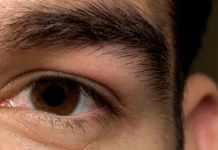


What Is the Rarest Eye Color? Green, Gray, Amber & More
Green is often described as one of the rarest naturally occurring major eye colors in the world, occurring in roughly 2% of people according to a scientific review of human iris pigmentation.
However, the answer is not quite as simple as saying that green is always the rarest eye color.
Eye-color prevalence varies according to:
- Population
- Ancestry
- Geographic region
- How researchers classify iris colors
- Whether gray, amber, and hazel are counted separately
Gray and amber can be even less common than green in some populations, but there is no single global dataset that provides a perfectly reliable ranking of every natural eye color.
Brown, by contrast, is by far the most common eye color worldwide.
Quick Answer
A major scientific review published in the Journal of Cellular Physiology estimated worldwide eye-color frequencies at approximately:
| Eye Color | Approximate Global Frequency |
|---|---|
| Brown | ~79% |
| Blue | ~8–10% |
| Hazel | ~5% |
| Green | ~2% |
| Gray | Rare |
| Amber | Rare |
The same review describes gray and red/violet eye appearances as rare but does not provide precise worldwide percentages for them. (PubMed)
So the most accurate short answer is:
Green is one of the rarest major natural eye colors worldwide, while gray and amber may be even less common in certain populations.
Red or violet-looking eyes are different. They are usually associated with very low pigmentation and should not simply be treated as ordinary eye-color categories.
Why Is It Difficult to Name One Rarest Eye Color?
Eye color sounds easy to classify, but human iris pigmentation actually exists on a continuum.
Researchers may group people into categories such as:
- Brown
- Blue
- Green/hazel
while other studies distinguish:
- Green
- Hazel
- Gray
- Amber
- Light blue
- Dark brown
- Light brown
This means two studies can examine the same population but report different percentages simply because they classify eye color differently.
That is why online claims such as:
- “Green is definitely the rarest eye color”
- “Gray is the rarest”
- “Amber is the rarest”
- “Violet is the rarest”
should be interpreted carefully.
What Determines Eye Color?
Eye color is mainly determined by pigmentation in the iris, the colored structure surrounding the pupil.
According to MedlinePlus Genetics, eye color depends heavily on:
- The amount of melanin in the iris
- How that pigment is distributed
- Multiple genetic variants
- How light interacts with iris tissue
People with brown eyes generally have more melanin in the front layers of the iris.
People with blue eyes generally have much less.
Green, hazel, and gray eyes result from more complex combinations of pigment and light scattering.
Is Eye Color Controlled by One Gene?
No.
One of the most common misconceptions about eye color is that it is controlled by a single “brown versus blue” gene.
Modern genetics shows that eye color is polygenic, meaning multiple genes contribute.
MedlinePlus lists several genes that can influence eye pigmentation, including:
- OCA2
- HERC2
- ASIP
- IRF4
- SLC24A4
- SLC24A5
- SLC45A2
- TPCN2
- TYR
- TYRP1
This complex inheritance explains why children do not always have the eye color predicted by simple classroom genetics charts.
Why OCA2 and HERC2 Matter
Two genes on chromosome 15 are particularly important.
OCA2
The OCA2 gene plays an important role in normal pigmentation and in the production and storage of melanin.
MedlinePlus explains that OCA2 affects the amount and quality of pigment present in the iris. (MedlinePlus Genetics)
HERC2
A region of the nearby HERC2 gene helps regulate the activity of OCA2.
Certain genetic variants can reduce OCA2 expression and therefore reduce the amount of melanin in the iris.
This can contribute to lighter eye colors.
What Is the Most Common Eye Color?
Brown is the most common eye color worldwide.
The 2020 scientific review of iris pigmentation estimated that approximately:
79% of the world’s population has brown eyes.
(PubMed)
Brown eyes are especially common among populations from:
- Africa
- Asia
- Latin America
- The Middle East
although eye color varies within all populations.
How Rare Are Green Eyes?
Green eyes are estimated to occur in approximately:
2% of the world’s population.
That makes green one of the rarest major natural eye-color categories.
Green eyes are more frequent among some populations with ancestry from parts of:
- Northern Europe
- Central Europe
- Western Europe
but prevalence still varies considerably.
Why Do Green Eyes Look Green?
Green eyes do not contain a distinct green pigment.
Instead, their appearance results from:
- Relatively low-to-moderate melanin levels
- The structure of the iris
- Light scattering
The combination produces the green appearance that we perceive.
This is similar in principle to blue eyes, which also do not contain blue pigment.
Are Gray Eyes Rarer Than Green Eyes?
They may be.
Gray eyes appear to be extremely uncommon in many populations, but reliable worldwide statistics are difficult to obtain.
One reason is that gray eyes are often grouped with:
- Blue
- Green
- Other light eye colors
in scientific research.
Therefore, it is not accurate to state one universal percentage for gray eyes.
The broader scientific review of iris color simply categorizes gray among the rare eye colors. (PubMed)
What Do Gray Eyes Look Like?
Gray eyes may appear:
- Silver-gray
- Slate gray
- Blue-gray
- Green-gray
Their appearance can vary depending on:
- Lighting
- Clothing
- Surrounding colors
- Pupil size
This is one reason gray and blue eyes can be difficult to distinguish consistently.
Are Amber Eyes Rare?
Yes.
Amber eyes are considered uncommon.
They usually appear relatively uniform in color and may look:
- Golden
- Honey-colored
- Copper
- Yellow-brown
Because amber is not always separated from hazel or light brown in studies, reliable global prevalence estimates are difficult to calculate.
Amber Eyes vs. Hazel Eyes
Amber and hazel eyes are often confused.
Amber eyes
Amber eyes typically have a more uniform:
- Golden
- Copper
- Yellow-brown
appearance.
Hazel eyes
Hazel eyes usually contain a mixture of colors such as:
- Brown
- Green
- Gold
They may appear different under different lighting conditions.
Are Hazel Eyes Rare?
Hazel eyes are uncommon globally, but they appear to be more common than green eyes.
The major 2020 review estimated hazel eyes at around:
5% worldwide.
(PubMed)
However, prevalence varies greatly by ancestry and region.
How Common Are Blue Eyes?
Blue eyes are estimated to occur in approximately:
8–10% of the world’s population.
They are therefore substantially more common worldwide than green eyes.
Blue eyes are particularly common among populations with Northern and Eastern European ancestry.
Why Do Blue Eyes Look Blue?
Blue eyes do not contain blue pigment.
They generally contain relatively little melanin in the front portion of the iris.
Light scattering through the iris produces the blue appearance.
Are Violet Eyes Real?
Eyes can sometimes appear violet or lavender, but violet is not normally treated as one of the standard major natural iris-color categories.
Very light-colored eyes may appear:
- Violet
- Lavender
- Red-violet
because of:
- Very low pigmentation
- Lighting
- Photography
- Light reflection
- Conditions involving reduced melanin
Claims that a large measurable percentage of people have naturally violet eyes should therefore be treated cautiously.
Are Red Eyes a Natural Eye Color?
Red or pinkish-looking irises are not generally considered a typical eye-color category like brown, blue, green, or hazel.
They may occur when pigmentation in the iris is extremely low.
This can occur in some forms of albinism.
MedlinePlus explains that oculocutaneous albinism reduces pigmentation in both the iris and retina and can also cause vision problems such as reduced visual acuity, nystagmus, strabismus, and light sensitivity. (MedlinePlus Genetics)
What Is Ocular Albinism?
Ocular albinism is an inherited pigmentation condition primarily affecting the eyes.
Reduced pigment can result in:
- Very light irises
- Light sensitivity
- Reduced visual acuity
- Other developmental vision problems
Eye color alone cannot diagnose albinism.
A proper ophthalmologic evaluation is necessary when a pigmentation disorder is suspected.
Are Purple Eyes Real?
“Purple eyes” and “violet eyes” are often used interchangeably online.
Humans do not normally produce a purple iris pigment.
What appears purple may actually be:
- Very light blue
- Blue-gray
- Red-violet
- A lighting effect
- Colored contact lenses
- Photography or editing
What Are “Blue Canary Eyes”?
“Blue canary eyes” is not a recognized medical or genetic eye-color category.
The previous version of this article presented “blue canary eyes” as an exceptionally rare eye color.
That claim is not supported by established genetics or ophthalmology references and should not be used.
Is Heterochromia the Rarest Eye Color?
No.
Heterochromia is not an eye color.
It describes a difference in pigmentation between the eyes or within one iris.
MedlinePlus defines heterochromia as having different-colored eyes in the same person. (MedlinePlus)
For example:
- One eye may be blue.
- The other may be brown.
Or a portion of one iris may have a different color.
Types of Heterochromia
Complete Heterochromia
Each eye has a different overall color.
For example:
one blue eye + one brown eye
Sectoral Heterochromia
One part of an iris has a different color from the rest.
Central Heterochromia
A ring of different pigmentation appears around the pupil.
These are pigmentation patterns rather than separate eye colors.
What Causes Heterochromia?
Heterochromia may be:
- Inherited
- Present from birth
- Associated with certain conditions
- Acquired later
MedlinePlus lists possible causes of acquired eye-color differences including:
- Injury
- Bleeding
- Eye inflammation
- Glaucoma
- Some glaucoma medications
- Foreign objects in the eye
Should New Heterochromia Be Checked?
Yes.
If the color of one eye changes unexpectedly, especially during adulthood, an eye examination is appropriate.
A new eye-color change can occasionally be associated with:
- Injury
- Inflammation
- Glaucoma
- Other eye conditions
The same principle applies to other unexplained eye symptoms.
For example, persistent excessive tearing can have several causes, which we cover in our guide on why your eye keeps watering.
Can Eye Color Change Over Time?
Yes, particularly during early childhood.
Babies can be born with relatively light-colored eyes that become darker as iris pigmentation develops.
The apparent color of adult eyes can also vary slightly because of:
- Lighting
- Pupil size
- Surrounding colors
However, a significant new color change in adulthood is different from normal visual variation.
When Should an Eye-Color Change Be Evaluated?
Seek an eye examination if you develop:
- Sudden color change in one eye
- New heterochromia
- Eye pain
- Persistent redness
- Blurred vision
- Vision loss
- Light sensitivity
- Eye injury
These symptoms should not be dismissed as cosmetic changes.
Similarly, persistent or recurrent eyelid movements have different causes than pigment changes. If that is your concern, see our guide on what causes eye twitching.
Does Eye Color Affect Vision?
Ordinary differences between:
- Brown
- Blue
- Green
- Hazel
- Gray
do not generally determine whether someone has good or poor visual acuity.
However, disorders involving severely reduced eye pigmentation can affect visual development.
For example, albinism may be associated with:
- Reduced vision
- Nystagmus
- Strabismus
- Photophobia
Are Light-Colored Eyes More Sensitive to Light?
Some people with light-colored irises may experience greater sensitivity to bright light because they have less melanin in the iris.
However, normal blue or green eye color is not itself a disease.
Severe or newly developing light sensitivity deserves professional evaluation, especially when accompanied by:
- Pain
- Redness
- Vision changes
Can Two Blue-Eyed Parents Have a Brown-Eyed Child?
Yes, although it is uncommon.
Older genetics lessons sometimes taught that two blue-eyed parents could never have a brown-eyed child.
Modern genetics shows that the situation is much more complicated.
MedlinePlus explains that multiple genes contribute to eye pigmentation, which means apparently unexpected combinations can occur. (MedlinePlus Genetics)
Can Brown-Eyed Parents Have a Blue-Eyed Child?
Yes.
Two brown-eyed parents may carry combinations of genetic variants associated with lighter pigmentation.
Their child’s eye color therefore cannot be perfectly predicted from the parents’ visible eye colors alone.
Is Eye Color Inherited From the Mother or Father?
Both.
A child inherits genetic information from both parents.
Because several genes contribute to iris pigmentation, eye color can reflect genetic variants inherited across both sides of the family.
Can Eye Color Skip Generations?
It may appear to.
A child can have an eye color resembling:
- A grandparent
- Another relative
rather than either parent.
This is not necessarily one gene “skipping” a generation.
It reflects the complex way multiple pigmentation-related genes combine.
Does Eye Color Affect Personality?
No scientifically established relationship shows that eye color predicts personality.
Claims such as:
- Green eyes mean jealousy
- Blue eyes mean sensitivity
- Brown eyes mean trustworthiness
- Gray eyes mean mystery
are cultural stereotypes rather than established biological facts.
Does Eye Color Reveal Health?
Normal iris color by itself is not a reliable measure of overall health.
However, some medical or genetic conditions can affect eye pigmentation.
Examples include:
- Albinism
- Heterochromia associated with certain conditions
- Eye injury
- Eye inflammation
The important distinction is between normal lifelong eye color and a new change in pigmentation.
Can You Naturally Change Your Eye Color?
There is no established:
- Food
- Supplement
- Eye exercise
- Detox
- Herbal remedy
that safely and permanently changes genetically determined iris color.
Claims that a diet or supplement permanently changes eye color should be viewed skeptically.
Can Colored Contact Lenses Change Eye Color?
Colored contact lenses can temporarily alter the appearance of your eyes.
However, contact lenses are medical devices.
Poorly fitted or improperly used lenses can increase the risk of:
- Corneal injury
- Infection
- Inflammation
Cosmetic lenses should therefore be obtained and used responsibly rather than treated like ordinary fashion accessories.
Can Eye Color Make the Eye Look More Watery or Red?
Eye color itself does not cause watering or redness.
Those symptoms are more often related to other factors such as:
- Dry eye
- Irritation
- Allergy
- Infection
- Tear-duct problems
If watering is your main symptom rather than eye color, our detailed article on why an eye keeps watering explains the most common causes and when professional care may be needed.
Does Eye Twitching Have Anything to Do With Eye Color?
No.
Eye twitching generally involves involuntary contractions of the eyelid muscles rather than iris pigmentation.
Common triggers include:
- Fatigue
- Stress
- Caffeine
- Eye strain
- Dry eyes
You can read more in our guide to what causes eye twitching.
This is a useful distinction because visible eye symptoms can arise from very different structures.
Eye Colors From Most Common to Less Common
A rough worldwide ordering is often presented as:
- Brown
- Blue
- Hazel
- Green
- Gray or amber
However, the final positions should not be interpreted as a precise global ranking.
Gray and amber are difficult to compare because many studies do not classify them separately.
Rarest Eye Colors at a Glance
| Eye Feature | How Common Is It? | Important Context |
|---|---|---|
| Brown | ~79% worldwide | Most common |
| Blue | ~8–10% worldwide | Much more common in some European populations |
| Hazel | ~5% worldwide | Mixed brown/green/gold appearance |
| Green | ~2% worldwide | One of the rarest major natural colors |
| Gray | Very rare | Often grouped with blue or green |
| Amber | Rare | Sometimes grouped with hazel or brown |
| Red/violet appearance | Very unusual | Can occur with extremely low pigmentation |
| Heterochromia | Uncommon pigmentation pattern | Not a separate eye color |
The percentages above come primarily from a comprehensive scientific review of human iris pigmentation and should be treated as approximate rather than exact population counts. (PubMed)
What Is the Rarest Natural Eye Color?
If we limit the question to commonly recognized natural iris colors, there is no perfect worldwide answer.
The most defensible conclusion is:
Green is among the rarest major natural eye colors worldwide, while gray and amber may be even rarer within certain populations.
That is more accurate than saying:
- Violet is definitively the rarest.
- Red is an ordinary eye-color category.
- Heterochromia is an eye color.
- “Blue canary” is a recognized human eye color.
Why Eye-Color Statistics Should Be Treated as Estimates
Eye-color statistics are not like blood-type statistics.
Several factors complicate measurement:
Classification
One observer may call an eye:
- Gray
while another calls it:
- Blue-gray
Mixed colors
Hazel eyes can contain:
- Green
- Brown
- Gold
Regional variation
The frequency of blue or green eyes can be dramatically different between populations.
Self-reporting
Some studies rely on participants describing their own eye color.
Small datasets
A percentage from one country should not automatically be applied to the entire world.
This is why the approximately 79%, 8–10%, 5%, and 2% figures are useful reference points, but they should not be presented as exact universal measurements.
What Actually Makes Human Eye Color So Diverse?
Human iris color is the result of several interacting biological factors:
- Melanin concentration
- Melanin distribution
- Iris structure
- Genetic variation
- Light scattering
MedlinePlus emphasizes that iris colors range along a continuum from very light blue to dark brown rather than existing as completely separate genetic categories. (MedlinePlus Genetics)
That is why two people both described as having “green eyes” can have noticeably different iris patterns.
The Bottom Line
Brown is the most common eye color worldwide.
A major scientific review estimates that roughly:
- 79% of people have brown eyes
- 8–10% have blue eyes
- 5% have hazel eyes
- 2% have green eyes
(PubMed)
This makes green one of the rarest major natural eye colors.
Gray and amber may be even less common in certain populations, but researchers do not classify these colors consistently enough to establish one universal worldwide ranking.
Red or violet-looking eyes are different because they are generally associated with very low pigmentation rather than being common independent iris-color categories.
Heterochromia is also different: it describes a variation in pigmentation between the eyes or within an iris rather than one particular eye color.
Most importantly, normal lifelong eye-color variation is harmless.
A new or sudden change in the color of one eye, particularly when accompanied by pain, redness, blurred vision, or other symptoms, should be evaluated by an eye-care professional.
If your concern is not pigmentation but another visible eye symptom, our guides to eye twitching and persistent eye watering explain those conditions separately.
Frequently Asked Questions
What is the rarest eye color in the world?
Green is one of the rarest major natural eye colors worldwide and has been estimated at roughly 2% of the population. Gray and amber may be even less common in some populations, but there is no universally reliable global ranking because studies classify eye colors differently.
Are green eyes the rarest eye color?
Green is commonly considered one of the rarest major eye colors. However, gray and amber eyes can be less common in certain populations, so it is difficult to identify one universally rarest natural color.
Are gray eyes rarer than green eyes?
They may be. Gray eyes are extremely uncommon in some populations, but reliable worldwide prevalence estimates are difficult because gray is often grouped with blue or green in research.
Are amber eyes rare?
Yes. Amber eyes are considered uncommon and usually have a more uniform golden, copper, or yellow-brown appearance than hazel eyes.
Are violet eyes real?
Some very light eyes can appear violet because of low pigmentation, lighting, or conditions such as albinism. Violet is not generally treated as a common independent eye-color category.
Are red eyes a natural eye color?
Red or pinkish-looking irises are not a typical eye-color category. They can sometimes occur when iris pigmentation is extremely low, including in some forms of albinism.
Is heterochromia an eye color?
No. Heterochromia describes a difference in eye pigmentation, such as having one blue eye and one brown eye or having differently colored regions within one iris.
What is the most common eye color?
Brown is the most common eye color worldwide. A scientific review estimated that approximately 79% of people globally have brown eyes.
How common are blue eyes?
Blue eyes are estimated to occur in roughly 8–10% of the world’s population, although they are much more common in some European populations.
How common are hazel eyes?
One scientific review estimated hazel eyes at approximately 5% globally, although prevalence varies by ancestry and population.
What determines eye color?
Eye color is determined by multiple genes that influence the amount and distribution of melanin in the iris. OCA2 and HERC2 are two particularly important genes, but many others contribute.
Can eye color change?
Eye color can change somewhat during childhood and may look different depending on lighting or pupil size. A new or sudden color change in one eye during adulthood should be evaluated by an eye-care professional.
Can two blue-eyed parents have a brown-eyed child?
Yes, although it is uncommon. Eye color is controlled by multiple genes, so inheritance is more complex than the older single-gene dominant and recessive model suggested.
Does eye color affect eyesight?
Ordinary eye-color differences generally do not determine visual acuity. However, conditions that greatly reduce eye pigmentation, such as albinism, can affect vision and cause light sensitivity.
Can you permanently change your eye color naturally?
There is no established food, supplement, exercise, or home remedy that safely and permanently changes genetically determined iris color.