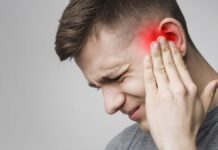


Ear pain can be sharp, dull, throbbing, burning, or feel like pressure deep inside the ear.
Sometimes the problem actually starts in the ear itself. Other times, pain is referred to the ear from nearby structures such as the jaw, teeth, throat, or sinuses.
Common causes include:
- Middle ear infection
- Swimmer’s ear
- Earwax blockage
- Eustachian tube dysfunction
- Pressure changes from flying or diving
- A perforated eardrum
- Trapped water
- Temporomandibular disorders (TMD)
- Dental problems
- Sore throat or tonsillitis
- Sinus or nasal inflammation
- Injury or foreign objects
Most earaches are not emergencies, but severe pain, sudden hearing loss, significant dizziness, drainage, bleeding, high fever, or symptoms after major trauma should be evaluated promptly.
Quick Answer
Your ear may hurt because the problem is inside the ear or because pain is being referred from another nearby area.
The Cleveland Clinic divides ear pain into two broad categories:
- Primary ear pain: The cause is within the ear itself.
- Referred ear pain: The pain originates somewhere else, such as the jaw, teeth, throat, or sinuses.
If your pain is accompanied by fullness or muffled hearing rather than significant pain, see our guide on why your ear feels clogged.
If the main issue is pressure after a flight, cold, or altitude change, our guide on how to relieve ear pressure is more specific.
What Does Ear Pain Feel Like?
Ear pain can present in different ways.
You may notice:
- Sharp stabbing pain
- Dull ache
- Pressure
- Throbbing
- Burning
- Pain when touching the ear
- Pain when chewing
- Pain when swallowing
- Pain that spreads to the jaw or neck
- Pain combined with muffled hearing
- Pain combined with ringing
- Pain that comes and goes
The pattern can offer clues, but it usually cannot confirm the cause on its own.
1. Middle Ear Infection
A middle ear infection, also called acute otitis media, occurs in the space behind the eardrum.
It often develops after a cold, flu, or another respiratory infection because swelling can block the Eustachian tube and allow fluid to build up behind the eardrum.
The Mayo Clinic lists common symptoms in adults such as:
- Ear pain or pressure
- Trouble hearing
- Fluid draining from the ear
Children may also develop:
- Fever
- Fussiness
- Trouble sleeping
- Tugging at the ear
- Balance problems
- Reduced response to sounds
What to do
A healthcare professional can examine the eardrum to determine whether there is:
- Infection
- Fluid
- Inflammation
- A perforation
Many mild ear infections improve on their own, but some require antibiotics depending on age, severity, duration, and other factors.
Do not assume every earache needs antibiotics.
2. Swimmer’s Ear
Swimmer’s ear, or otitis externa, is an infection of the outer ear canal.
It often develops when water remains in the ear canal after swimming or bathing, creating an environment where bacteria can multiply.
The CDC notes that symptoms can include:
- Pain when the outer ear is pulled
- Pain when pressure is placed on the tragus
- Itching inside the ear
- Redness
- Swelling
- Drainage
This is different from a middle ear infection.
A useful clue
If the ear hurts significantly when you:
- Pull the outer ear
- Press the small cartilage flap in front of the ear canal
swimmer’s ear becomes more likely.
If pain started after swimming and you mainly feel trapped water rather than infection, see our guide on how to get water out of your ear.
3. Earwax Blockage
Earwax normally protects the ear canal.
Problems can develop when wax accumulates and becomes impacted.
Possible symptoms include:
- Ear pain
- Fullness
- Muffled hearing
- Tinnitus
- Itching
Earwax is more likely to become impacted in people who frequently use:
- Cotton swabs
- Earbuds
- Hearing aids
- Earplugs
Trying to remove wax with objects can push it deeper.
If your ear feels more blocked than painful, our guide on how to open a blocked ear explains the different causes of blockage and why treatment depends on the cause.
4. Eustachian Tube Dysfunction
The Eustachian tube connects the middle ear to the back of the nose and throat.
It helps:
- Equalize pressure
- Drain middle-ear fluid
- Ventilate the middle ear
When it becomes swollen or does not open properly, you may experience:
- Pressure
- Mild pain
- Fullness
- Popping
- Crackling
- Muffled hearing
Common triggers include:
- Colds
- Allergies
- Nasal congestion
- Air travel
If pressure is the dominant symptom, see how to relieve ear pressure rather than repeatedly forcing the ear to pop.
5. Airplane Ear and Barotrauma
Rapid pressure changes can stretch the eardrum and cause pain.
This commonly happens during:
- Airplane descent
- Airplane takeoff
- Mountain travel
- Diving
Symptoms may include:
- Ear pressure
- Pain
- Muffled hearing
- Popping
- Fullness
Mild cases often improve after pressure equalizes.
More severe barotrauma can cause:
- Significant pain
- Hearing loss
- Tinnitus
- Dizziness
- Bleeding
If symptoms developed after diving and are severe, seek medical assessment rather than repeatedly forcing pressure-equalization maneuvers.
6. Perforated Eardrum
A perforated or ruptured eardrum is a hole or tear in the tympanic membrane.
Possible causes include:
- Ear infection
- Sudden pressure changes
- Loud explosions
- Ear injury
- Inserting objects into the ear
Symptoms may include:
- Sudden ear pain
- Drainage
- Hearing loss
- Tinnitus
- Dizziness
Sometimes pain suddenly decreases after an infected eardrum ruptures because pressure is released, but that does not mean the problem should be ignored.
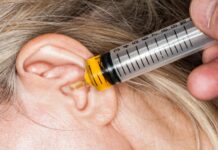
Avoid putting drops or objects into the ear unless a healthcare professional confirms they are safe.
7. Trapped Water
Water left inside the ear canal after bathing or swimming can cause:
- Fullness
- Mild discomfort
- Muffled hearing
- A sloshing sensation
The water itself may not initially be painful.
However, prolonged moisture can increase the risk of swimmer’s ear.
If your symptoms began immediately after swimming or showering, follow the safer methods in our guide on how to get water out of your ear.
Do not dig inside the ear with cotton swabs or other objects.
8. Temporomandibular Disorders (TMD)
Not all ear pain comes from the ear.
The temporomandibular joint sits directly in front of the ear and connects the jaw to the skull.
Temporomandibular disorders can produce pain that feels as though it is coming from the ear.
According to the National Institute of Dental and Craniofacial Research, symptoms may include:
- Jaw pain
- Pain in chewing muscles
- Pain that spreads into the face or neck
- Jaw stiffness
- Painful clicking or popping
- Limited jaw movement
- Ear-related symptoms such as ringing or fullness
Ear hurts when chewing
If your ear mainly hurts when you:
- Chew
- Yawn
- Open your mouth wide
- Clench your jaw
TMD becomes one possible explanation.
Pain may be especially noticeable directly in front of the ear.
9. Dental Problems
Dental pain can also be felt in the ear.
Possible causes include:
- Tooth decay
- Dental abscess
- Impacted wisdom tooth
- Cracked tooth
- Gum infection
- Tooth grinding
The nerves supplying the teeth, jaw, face, and ear overlap, which is why the brain may interpret dental pain as ear pain.
Clues that the source may be dental include:
- Tooth sensitivity
- Pain while biting
- Gum swelling
- Facial swelling
- Bad taste in the mouth
- Pain focused around a specific tooth
If the ear itself appears normal but pain persists, dental evaluation may be appropriate.
10. Sore Throat and Tonsillitis
Pain from the throat can radiate into the ears.
This can happen with:
- Tonsillitis
- Pharyngitis
- Strep throat
- Other throat infections
You may experience:
- Pain when swallowing
- Sore throat
- Fever
- Swollen neck glands
- Earache even though the ear itself is normal
Pain that occurs mainly when swallowing may point toward the throat rather than the ear canal.
11. Sinus or Nasal Inflammation
Colds and allergies can affect the ear indirectly.
Inflammation in the nose and upper airway can interfere with Eustachian tube function and cause:
- Ear pressure
- Fullness
- Mild pain
- Muffled hearing
Sinus symptoms may also include:
- Nasal congestion
- Facial pressure
- Runny nose
- Postnasal drip
A plugged ear during a cold is often caused by Eustachian tube dysfunction rather than an infection in the ear itself.
12. Foreign Object or Ear Injury
Objects inside the ear can cause:
- Pain
- Bleeding
- Fullness
- Hearing loss
- Infection
Children are more likely to place small objects inside the ear, but adults can also injure their ears while attempting to clean them.
Do not attempt to remove deeply lodged objects using:
- Cotton swabs
- Tweezers
- Hairpins
- Paper clips
- Other household objects
These can push the object deeper or damage the eardrum.
Seek professional removal if an object is stuck.
Why Does My Ear Hurt When I Chew?
Pain while chewing is often associated with structures around the jaw.
Possible causes include:
- TMD
- Dental problems
- Ear infection
- Jaw muscle strain
TMD is especially worth considering if the pain is accompanied by:
- Jaw clicking
- Jaw stiffness
- Pain in front of the ear
- Clenching or grinding
- Limited mouth opening
The NIDCR notes that TMDs involve the jaw joint or chewing muscles and may cause pain around the joint in front of the ear.
Why Does My Ear Hurt When I Swallow?
Pain when swallowing may come from:
- Throat infection
- Tonsillitis
- Eustachian tube inflammation
- Middle ear infection
Because the throat and ears share nerve pathways, inflammation in one area can be perceived in another.
A sore throat plus ear pain does not necessarily mean the ear itself is infected.
Why Does My Ear Hurt When I Touch It?
Pain when touching or pulling the outer ear often points toward the ear canal or outer ear.
Swimmer’s ear is a common example.
The CDC notes that pain when tugging the outer ear or pressing the tragus is characteristic of swimmer’s ear.
Other possibilities include:
- Skin infection
- Local injury
- Irritation from earbuds
- Piercing infection
Why Does My Ear Hurt but There Is No Infection?
Ear pain without an ear infection is common.
Possible causes include:
- Earwax
- Eustachian tube dysfunction
- TMD
- Dental pain
- Throat problems
- Sinus inflammation
- Pressure changes
This is why an ear examination is useful when pain persists.
The cause may not be located inside the ear at all.
Why Does My Ear Hurt After Swimming?
The most likely possibilities include:
- Trapped water
- Outer-ear irritation
- Swimmer’s ear
Pain becomes more concerning if you also notice:
- Itching
- Redness
- Drainage
- Pain when the outer ear is touched
If the ear simply feels wet or blocked without significant pain, start with our article on how to get water out of your ear.
Why Does My Ear Hurt After Flying?
Rapid cabin-pressure changes can temporarily create pressure differences across the eardrum.
This can cause:
- Pain
- Pressure
- Muffled hearing
- Popping
Swallowing, yawning, chewing gum, and gentle pressure equalization may help.
See our detailed guide on how to relieve ear pressure for safer techniques during and after flights.
Severe pain, bleeding, dizziness, or lasting hearing loss after a flight should be assessed.
Why Does My Ear Hurt at Night?
Ear pain may feel worse at night because there are fewer distractions and lying down can alter how pressure or inflammation feels.
Possible causes remain the same, including:
- Ear infection
- Earwax
- TMD
- Dental pain
- Eustachian tube dysfunction
Repeated nighttime pain deserves investigation rather than being treated only with pain medicine.
Can Earbuds Cause Ear Pain?
Yes.
Earbuds can cause discomfort when they:
- Fit too tightly
- Irritate ear-canal skin
- Trap moisture
- Are worn for long periods
- Push earwax deeper
Dirty earbuds may also contribute to irritation.
If pain is repeatedly associated with earbud use, stop using them temporarily and allow the ear to recover.
Persistent pain should be evaluated.
Can Earwax Cause Ear Pain?
Yes.
Impacted wax can cause:
- Pressure
- Fullness
- Pain
- Muffled hearing
- Tinnitus
Do not diagnose wax blockage solely from symptoms.
A healthcare professional can confirm it by looking in the ear.
If blockage is your main symptom, see why your ear feels clogged for a broader comparison of likely causes.
Can an Earache Go Away on Its Own?
Sometimes.
Mild pain associated with:
- Temporary pressure changes
- Mild Eustachian tube dysfunction
- Certain uncomplicated ear infections
may improve without extensive treatment.
However, the cause matters.
Persistent pain should not simply be ignored.
Cleveland Clinic recommends medical evaluation when ear pain lasts longer than about three days or repeatedly returns.
How to Relieve Ear Pain at Home
Home measures are appropriate only when symptoms are mild and there are no warning signs.
Use appropriate pain relief
Over-the-counter pain relievers such as acetaminophen or ibuprofen may help some people.
Follow the product instructions and consider your medical history, other medicines, allergies, pregnancy status, kidney disease, stomach ulcers, or other conditions that may affect which medicine is safe.
Do not give aspirin to children or teenagers recovering from influenza or chickenpox because of the risk of Reye syndrome.
Try a warm compress
A comfortably warm compress placed against the outer ear may provide temporary relief.
Do not use excessive heat.
Rest
Rest and fluids may help if ear pain occurs during a cold or viral illness.
Address pressure gently
If pain is clearly associated with pressure changes, gentle swallowing, yawning, or chewing may help.
Do not repeatedly force the ears to pop.
What Not to Do for Ear Pain
Avoid:
- Putting cotton swabs deep inside the ear
- Using hairpins or other objects
- Digging out wax
- Using ear candles
- Forcefully popping the ears
- Using random ear drops when you do not know whether the eardrum is intact
- Taking leftover antibiotics
Ear treatment depends on the cause.
An outer-ear infection, middle-ear infection, earwax blockage, TMD, and dental abscess require very different approaches.
Do Ear Drops Help Ear Pain?
Sometimes.
Ear drops may be useful for certain conditions such as:
- Swimmer’s ear
- Earwax
- Specific outer-ear problems
But they do not treat every cause of ear pain.
Drops generally do not solve:
- TMD
- Tooth pain
- Middle-ear pressure
- Throat-related pain
Do not place drops into the ear if you suspect a perforated eardrum unless a healthcare professional says the product is safe.
Do You Need Antibiotics for Ear Pain?
Not automatically.
Ear pain can have many non-bacterial causes.
Antibiotics do not treat:
- Earwax
- TMD
- Viral infections
- Pressure changes
- Dental problems unless a bacterial dental infection is present
- Eustachian tube dysfunction itself
Even some middle ear infections can improve without antibiotics.
Mayo Clinic notes that treatment depends on age, severity, duration, and diagnosis, and some infections may initially be managed with pain control and observation.
When Should You See a Doctor for Ear Pain?
Arrange medical evaluation if:
- Pain lasts more than about two to three days
- Pain is getting worse
- You have significant hearing loss
- Fluid, pus, or blood drains from the ear
- You develop fever
- You have significant swelling
- Symptoms follow ear trauma
- Ear pain keeps returning
- You experience persistent dizziness
- A foreign object is stuck in the ear
- The pain is severe enough to interfere with sleep or normal activity
Children younger than six months with possible ear infection symptoms should be assessed promptly.
When Is Ear Pain an Emergency?
Seek urgent care if ear pain occurs with:
- Sudden hearing loss
- Severe dizziness or vertigo
- Significant bleeding
- Severe head trauma
- Facial weakness
- Neurological symptoms
- Severe swelling behind the ear
- A rapidly worsening serious infection
Sudden hearing loss deserves particular attention.
The National Institute on Deafness and Other Communication Disorders considers sudden sensorineural hearing loss a medical emergency.
It may develop over hours or several days and can occur with:
- Ear fullness
- Tinnitus
- Dizziness
People sometimes assume the problem is wax or congestion and delay treatment.
Is Ear Pain From the Jaw or the Ear?
This can be difficult to tell without an examination.
Jaw-related pain becomes more likely when:
- Pain is triggered by chewing
- The jaw clicks or locks
- Pain is located in front of the ear
- You grind or clench your teeth
- The ear examination is normal
Ear-related pain becomes more likely when there is:
- Drainage
- Hearing loss
- Pain when touching the outer ear
- Fever
- Visible ear-canal inflammation
- Abnormal findings behind the eardrum
Sometimes both problems occur at the same time.
Ear Pain in Children
Children develop middle ear infections more often than adults because their Eustachian tubes are shorter, narrower, and more horizontal.
A child may not be able to describe ear pain directly.
Signs may include:
- Tugging at the ear
- Crying
- Irritability
- Fever
- Difficulty sleeping
- Reduced response to sounds
- Balance problems
- Poor appetite
Ear pulling alone does not prove there is an infection.
A healthcare professional needs to examine the ear to confirm the diagnosis.
The Bottom Line
Ear pain does not always mean you have an ear infection.
Common causes include:
- Middle ear infection
- Swimmer’s ear
- Earwax
- Eustachian tube dysfunction
- Pressure changes
- Trapped water
- TMD
- Dental problems
- Throat inflammation
The location and pattern of pain can provide clues.
Pain when pulling the outer ear may point toward swimmer’s ear. Pain with chewing may be related to TMD or dental problems. Pain after a flight may come from pressure imbalance.
Avoid putting cotton swabs or other objects deep inside the ear.
Mild pain may improve with appropriate over-the-counter pain relief and a warm compress, but persistent, severe, or worsening ear pain should be evaluated.
Seek prompt medical care for sudden hearing loss, severe dizziness, bleeding, significant drainage, neurological symptoms, or serious injury.
Frequently Asked Questions
Why does my ear hurt all of a sudden?
Sudden ear pain can be caused by an ear infection, pressure change, Eustachian tube dysfunction, earwax, swimmer’s ear, eardrum injury, or referred pain from the jaw or teeth. Severe or persistent sudden pain should be evaluated.
Why does my ear hurt when I chew?
Pain with chewing may be caused by temporomandibular disorders, dental problems, or less commonly an ear condition. Jaw clicking, clenching, stiffness, or pain directly in front of the ear makes TMD more likely.
Why does my ear hurt when I swallow?
Pain when swallowing may be referred from the throat or tonsils, or it may occur with Eustachian tube inflammation or a middle ear infection.
Why does my ear hurt when I touch it?
Pain when pulling or touching the outer ear is commonly associated with swimmer’s ear or inflammation of the outer ear canal.
Can earwax make your ear hurt?
Yes. Impacted earwax can cause pain, pressure, fullness, tinnitus, and muffled hearing. A healthcare professional can confirm whether wax is actually blocking the ear canal.
Why does my ear hurt but I don’t have an ear infection?
TMD, dental problems, earwax, Eustachian tube dysfunction, sinus or throat problems, and pressure changes can all cause ear pain without an ear infection.
How long should an earache last?
The duration depends on the cause. Mild temporary pain may improve within a day or two. Pain lasting more than about two to three days, worsening pain, or recurring earaches should be evaluated.
What can I do for ear pain at home?
For mild symptoms, an appropriate over-the-counter pain reliever and a comfortably warm compress may help. Avoid putting objects into the ear. Treatment should target the actual cause.
Do I need antibiotics for ear pain?
Not necessarily. Many causes of ear pain are not bacterial. Antibiotics should be used only when a healthcare professional determines they are appropriate.
Can TMJ problems cause ear pain?
Yes. Temporomandibular disorders can cause pain around the jaw joint directly in front of the ear and may also cause ear fullness or other ear-related symptoms.
When should I worry about ear pain?
Seek medical care if pain is severe, lasts more than a few days, gets worse, or occurs with fever, drainage, significant hearing loss, dizziness, or recurrent symptoms.
Is sudden hearing loss with ear pain an emergency?
Sudden unexplained hearing loss in one ear should be assessed promptly, whether or not ear pain is present. Sudden sensorineural hearing loss is considered a medical emergency.