

An eyelid that suddenly starts twitching can be distracting, especially when it continues on and off for hours or several days.
Fortunately, most occasional eyelid twitching is harmless.
The most common type is called eyelid myokymia. It usually affects one eyelid at a time and may be triggered by everyday factors such as fatigue, stress, too much caffeine, eye strain, nicotine, or irritation of the eye surface.
Less commonly, persistent or forceful eyelid spasms can be associated with conditions such as benign essential blepharospasm or hemifacial spasm.
Understanding what your twitch feels like—and whether you have other symptoms—can help determine whether simple lifestyle changes are reasonable or whether an eye examination is appropriate.
Quick Answer
The most common causes and triggers of eye or eyelid twitching include:
- Stress
- Lack of sleep
- Fatigue
- Too much caffeine
- Eye strain
- Dry or irritated eyes
- Nicotine
- Bright light
- Alcohol
- Certain medications
According to the Mayo Clinic, ordinary eyelid myokymia is very common and typically affects the upper or lower eyelid of one eye at a time.
Most minor twitches resolve without treatment.
You should consider medical evaluation if the twitching continues for several weeks, forces the eyelid completely closed, spreads to other parts of the face, or occurs with symptoms such as eyelid drooping, weakness, significant redness, swelling, or discharge.
What Is Eye Twitching?
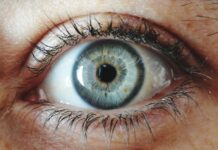
“Eye twitching” is a general term people commonly use to describe involuntary movement around the eye.
In many cases, it is actually the eyelid, rather than the eyeball itself, that is twitching.
There are several different types of involuntary movements that can affect this area.
Eyelid Myokymia
Eyelid myokymia is the type most people experience.
It usually causes a small, repetitive fluttering or rippling sensation in one eyelid.
The Cleveland Clinic describes eyelid myokymia as extremely common and usually harmless.
It most often:
- Affects one eye at a time
- Occurs in the upper or lower eyelid
- Is more common in the lower eyelid
- Feels mild rather than forceful
- Comes and goes
- Lasts seconds or minutes at a time, although episodes may recur for longer periods
For many people, the twitch disappears after correcting triggers such as poor sleep, stress, or excessive caffeine.
Benign Essential Blepharospasm
Benign essential blepharospasm is different from an ordinary eyelid twitch.
It is a neurological movement disorder that causes involuntary blinking or eyelid closure, typically affecting both eyes.
According to the National Eye Institute, blepharospasm may begin with occasional twitching but can progress to more frequent spasms that force the eyes closed.
It is much less common than everyday eyelid myokymia.
Hemifacial Spasm
Hemifacial spasm involves involuntary muscle contractions on one side of the face.
The twitching can start near the eye and later involve other facial muscles on the same side.
This pattern is different from an isolated eyelid flutter.
What Causes Eye Twitching?
Occasional eyelid twitching often results from one or more everyday triggers.
Sometimes several factors occur together.
For example, someone may be sleeping poorly, drinking more coffee to compensate for fatigue, spending long hours in front of a computer, and experiencing increased stress at the same time.
Any combination of these may contribute to eyelid twitching.
1. Stress
Stress is one of the most frequently reported triggers for ordinary eyelid twitching.
Periods of:
- Work pressure
- Anxiety
- Poor sleep
- Emotional stress
- Major life changes
may make twitching more noticeable.
Reducing the underlying stress does not guarantee immediate relief, but ordinary myokymia often improves when stress levels decrease.
2. Fatigue and Lack of Sleep
Being tired or sleep-deprived can trigger eyelid twitching.
If twitching begins during a period when you have been sleeping less than usual, improving sleep may be one of the simplest things to try.
Persistent sleep deprivation can also increase reliance on caffeine, creating another potential twitching trigger.
3. Too Much Caffeine
Caffeine stimulates the nervous system.
For some people, consuming large amounts of:
- Coffee
- Tea
- Energy drinks
- Pre-workout products
- Caffeinated soft drinks
- Other stimulants
may contribute to eyelid twitching.
You do not necessarily need to eliminate caffeine completely.
If your intake has recently increased, gradually reducing it and observing whether the twitch improves may be useful.
4. Eye Strain
Long periods of concentrated visual activity may contribute to twitching.
Common examples include:
- Computer work
- Smartphone use
- Reading for long periods
- Detailed close-up work
- Prolonged gaming
Digital screens themselves do not necessarily cause a neurological eye disorder, but prolonged visual concentration can contribute to eye fatigue and discomfort.
Taking regular visual breaks and addressing an outdated glasses or contact lens prescription may help when eye strain is contributing.
5. Dry Eyes
Dry or irritated eyes can also accompany eyelid twitching.
Dry-eye symptoms may include:
- Burning
- Grittiness
- Stinging
- Redness
- Watery eyes
- Light sensitivity
- A feeling that something is in the eye
Interestingly, dry eyes can sometimes cause excessive watering because irritation triggers reflex tear production.
If watering rather than twitching is your main concern, see our guide on why your eye keeps watering.
Persistent dry-eye symptoms should be evaluated if they do not improve or interfere with daily activities.
6. Nicotine
Nicotine is another potential trigger for eyelid myokymia.
This includes nicotine exposure from products such as:
- Cigarettes
- Vapes
- Nicotine pouches
- Other nicotine-containing products
If twitching is persistent and nicotine use is frequent, reducing exposure may help.
7. Alcohol
Alcohol is listed among possible triggers of ordinary eyelid twitching by the Mayo Clinic.
If you notice twitching repeatedly after alcohol consumption, the timing may help identify a personal trigger.
8. Bright Light and Light Sensitivity
Bright light can trigger or worsen eyelid twitching in some people.
Light sensitivity is also particularly relevant in people with blepharospasm.
If twitching occurs primarily in bright environments or is accompanied by significant sensitivity to light, an eye examination may help identify other causes.
9. Eye or Eyelid Irritation
Irritation of the eye surface or inner eyelid can contribute to twitching.
Potential causes of irritation include:
- Dryness
- Wind
- Air pollution
- Contact lens irritation
- Eyelid inflammation
- Environmental irritants
Treating the underlying eye-surface problem may reduce the twitching.
10. Certain Medications
Some medications can cause or contribute to involuntary movements.
Mayo Clinic notes that eye twitching may occur as a medication side effect, including with certain medications used for Parkinson’s disease.
Do not stop a prescription medication because you develop an eyelid twitch.
Instead, contact the prescribing healthcare professional or pharmacist if you suspect a medication is contributing.
They can assess the timing, dosage, alternatives, and other possible causes.
Can Allergies Cause Eye Twitching?
Allergies are not among the best-established direct causes of eyelid myokymia.
However, allergies can make the eyes:
- Itchy
- Watery
- Inflamed
- Irritated
Frequent rubbing and eye-surface irritation may therefore coincide with eyelid twitching.
If itching, redness, or watering is the dominant symptom, the problem may be more related to eye irritation or allergies than to the twitch itself.
Does Dehydration Cause Eye Twitching?
Dehydration is commonly mentioned online as a cause of eyelid twitching, but it is not one of the primary established triggers listed by major clinical sources such as Mayo Clinic.
Severe fluid or electrolyte disturbances can affect muscle and nerve function more broadly, but an isolated eyelid twitch should not automatically be interpreted as evidence of dehydration or a mineral deficiency.
If you are otherwise well, common triggers such as fatigue, stress, caffeine, and eye irritation are generally more plausible explanations.
Can Vitamin or Mineral Deficiencies Cause Eye Twitching?
People often assume that twitching means they are deficient in magnesium or another nutrient.
The relationship is not that simple.
Nutritional abnormalities can affect nerve and muscle function, but ordinary eyelid myokymia is more commonly associated with factors such as stress, fatigue, caffeine, nicotine, dry eyes, and eye strain.
Do not take large doses of magnesium or other supplements solely because your eyelid is twitching unless a healthcare professional has identified a reason for supplementation.
Why Is My Left Eye Twitching?
From a medical perspective, a twitch occurring in the left eye does not usually have a fundamentally different meaning from a twitch occurring in the right eye.
Ordinary eyelid myokymia commonly affects only one eye at a time.
The side involved is therefore generally less important than:
- How long the twitch has lasted
- How forceful it is
- Whether the eyelid closes completely
- Whether other facial muscles are involved
- Whether you have weakness, drooping, vision problems, redness, or swelling
Cultural traditions sometimes assign different meanings to left- and right-eye twitching, but these interpretations are not medical diagnoses.
Why Is My Right Eye Twitching?
The same principle applies to the right eye.
A mild isolated right-eyelid twitch is commonly associated with the same triggers as left-eyelid twitching:
- Fatigue
- Stress
- Caffeine
- Eye strain
- Nicotine
- Dry-eye irritation
The location alone does not establish the cause.
Why Does My Lower Eyelid Twitch?
The lower eyelid is a common location for myokymia.
The twitch may feel like:
- Fluttering
- Pulsing
- Rippling
- Tiny repeated contractions
Although irritating, an isolated lower-eyelid twitch is usually not dangerous.
Consider recent changes in:
- Sleep
- Stress
- Caffeine intake
- Screen use
- Nicotine
- Eye dryness
before assuming the twitch indicates a neurological problem.
Why Does My Upper Eyelid Twitch?
Myokymia can also affect the upper eyelid.
Common triggers remain essentially the same.
However, if the upper eyelid is actually drooping rather than merely twitching, that is a different symptom and deserves medical evaluation, particularly if it appears suddenly or with other neurological symptoms.
What Does Eye Twitching From Stress Feel Like?
Stress-related eyelid myokymia generally feels like a small repetitive flutter rather than a painful spasm.
It often:
- Affects one eyelid
- Comes and goes
- Does not close the entire eye
- Occurs during periods of fatigue or emotional stress
- Improves as the trigger resolves
There is no specific test that can prove an occasional twitch is caused by stress.
If the pattern changes or other symptoms develop, another explanation may need to be considered.
Can Too Much Screen Time Make Your Eye Twitch?
Long periods of computer or phone use can contribute to eye strain and fatigue, both of which can accompany eyelid twitching.
If your work requires prolonged screen use, simple measures may help:
- Take regular breaks
- Blink normally and frequently
- Adjust screen brightness
- Reduce glare
- Position the screen comfortably
- Make sure your vision prescription is current
Persistent discomfort, headaches, blurred vision, or difficulty focusing deserves an eye examination.
Is Eye Twitching a Sign of a Neurological Problem?
Usually not.
An isolated mild eyelid twitch is much more commonly ordinary myokymia than a serious neurological disorder.
However, involuntary eye or facial movements can rarely occur with neurological conditions.
Mayo Clinic notes that disorders associated with eye twitching can include:
- Dystonia
- Multiple sclerosis
- Parkinson’s disease
- Tourette syndrome
- Bell’s palsy
- Facial dystonia
The important detail is that serious neurological causes generally produce other signs or symptoms, rather than only an occasional isolated eyelid flutter.
Eye Twitching vs. Blepharospasm
These should not be treated as interchangeable terms.
| Feature | Eyelid Myokymia | Benign Essential Blepharospasm |
|---|---|---|
| Common? | Very common | Uncommon |
| Typical pattern | Mild flutter | Strong blinking/spasm |
| Usually affects | One eyelid | Both eyes |
| Eye closes completely? | Usually no | Can |
| Common triggers | Stress, fatigue, caffeine | Neurological movement disorder |
| Often resolves itself? | Yes | May become chronic |
| Medical treatment often needed? | Usually no | Often, if significant |
The National Eye Institute notes that benign essential blepharospasm can eventually interfere with tasks such as reading or driving when spasms become severe.
Eye Twitching vs. Hemifacial Spasm
Hemifacial spasm typically affects muscles on one entire side of the face, not just the eyelid.
It may begin around one eye and later involve:
- Cheek
- Mouth
- Jaw
- Other muscles on the same side
Mayo Clinic notes that hemifacial spasm is commonly associated with pressure from a blood vessel on the facial nerve.
If twitching repeatedly spreads beyond the eyelid into one side of your face, medical assessment is appropriate.
How Long Does Eye Twitching Last?
Ordinary eyelid myokymia may last:
- Seconds
- Minutes
- Hours intermittently
- Several days
Some episodes can recur for longer.
Mayo Clinic notes that ordinary eye twitching often disappears within days or weeks, especially with rest, stress reduction, and decreased caffeine.
Duration alone is not the only consideration.
The nature of the twitch and accompanying symptoms matter as well.
How to Stop Eye Twitching
There is no guaranteed instant treatment for ordinary eyelid myokymia.
Instead, treatment usually focuses on reducing likely triggers.
Get Enough Sleep
If you have been sleeping poorly, prioritize consistent rest for several nights and see whether the twitch improves.
Reduce Caffeine
Consider cutting back if you consume large amounts of coffee, tea, energy drinks, pre-workout supplements, or other caffeinated products.
Reducing gradually may be more comfortable for people who consume caffeine regularly.
Manage Stress
Stress-management strategies can include:
- Exercise
- Relaxation techniques
- Regular sleep
- Time away from work or screens
- Breathing exercises
- Addressing ongoing sources of anxiety
Rest Your Eyes
If symptoms appear after prolonged computer or phone use, take regular breaks from close-up visual work.
Address Eye Dryness or Irritation
If your eyes feel dry, gritty, or irritated, an eye-care professional can help determine whether dry eye, eyelid inflammation, allergies, or another eye-surface condition is contributing.
Reduce Nicotine
Nicotine may contribute to eyelid myokymia and has much broader health consequences as well.
Reducing or stopping nicotine exposure may help remove one possible trigger.
Should You Massage a Twitching Eyelid?
Gentle relaxation around the eye may feel soothing, but vigorous rubbing is not advisable, particularly if the eye is irritated.
If you use a warm compress, make sure it is comfortably warm rather than hot and avoid putting pressure directly on the eyeball.
Home measures should not delay evaluation if you have concerning symptoms.
When Should You See a Doctor for Eye Twitching?
Most occasional twitching does not require medical treatment.
The Mayo Clinic recommends scheduling an evaluation when:
- Twitching does not resolve within a few weeks
- Your eyelid closes completely during the twitch
- You have difficulty opening your eye
- Twitching affects other parts of your face or body
- The affected area becomes weak or stiff
- Your eyelid droops
- Your eye becomes red or swollen
- There is eye discharge
The National Eye Institute similarly recommends seeing an eye doctor when twitching persists for more than a few weeks, forces the eyes closed, or begins affecting other facial muscles.
When Is Eye Twitching an Emergency?
A simple isolated eyelid twitch is generally not an emergency.
Seek urgent medical care if involuntary eye or facial movement occurs along with sudden symptoms such as:
- Facial weakness or drooping
- Weakness or numbness in an arm or leg
- Difficulty speaking
- Sudden severe vision changes
- Loss of consciousness
- Severe sudden headache
- Other rapidly developing neurological symptoms
These symptoms should not be assumed to be caused by ordinary eye twitching.
How Is Persistent Eye Twitching Diagnosed?
For ordinary short-lived eyelid myokymia, extensive testing is usually unnecessary.
If symptoms persist or appear unusual, a healthcare professional may ask about:
- How long the twitch has been occurring
- Whether one or both eyes are affected
- Whether other facial muscles twitch
- Sleep habits
- Caffeine intake
- Nicotine
- Medications
- Eye irritation
- Other neurological symptoms
An eye examination may also assess the eyelids, eye surface, vision, and surrounding structures.
Additional testing is determined by the clinical findings.
An MRI or neurological workup is not automatically required simply because an eyelid has been twitching.
Can Eye Twitching Be Treated Medically?
Treatment depends on the type of twitch.
Eyelid Myokymia
Most cases do not require medical treatment.
Reducing triggers is usually enough.
Benign Essential Blepharospasm
Persistent blepharospasm may require medical treatment.
The National Eye Institute notes that botulinum toxin injections are commonly used to relax the affected eyelid muscles.
Treatment may need to be repeated because the effect is temporary.
Hemifacial Spasm
Treatment depends on the cause and severity.
Medical evaluation is necessary to distinguish hemifacial spasm from an ordinary eyelid twitch and determine appropriate treatment.
Can Eye Twitching Affect Vision?
Mild myokymia generally does not damage vision.
However, severe spasms that repeatedly force the eyelids closed can interfere with a person’s ability to see during an episode.
This is one reason persistent blepharospasm should be medically assessed.
If you have true loss of vision, persistent blurred vision, double vision, or another significant change in eyesight, do not assume the problem is simply caused by an eyelid twitch.
The Bottom Line
Most eye twitching is actually eyelid myokymia, a common and usually harmless involuntary movement.
Common triggers include:
- Stress
- Fatigue
- Lack of sleep
- Excess caffeine
- Eye strain
- Dry-eye irritation
- Nicotine
- Alcohol
- Bright light
For an occasional mild twitch, getting more sleep, reducing caffeine, resting your eyes, and addressing stress or eye irritation may be enough.
What matters most is not whether the twitch occurs in your left or right eye. Pay attention to how long it lasts, how forceful it is, whether it spreads, and whether other symptoms occur.
Twitching that persists for several weeks, closes the eye completely, spreads to other facial muscles, or occurs with drooping, weakness, redness, swelling, or discharge deserves professional evaluation.
Frequently Asked Questions
Why is my eye twitching all of a sudden?
A sudden eyelid twitch is commonly triggered by fatigue, stress, excess caffeine, eye strain, dry-eye irritation, nicotine, or a combination of these factors. Most isolated mild twitches are temporary.
Is eye twitching usually serious?
No. The most common form, eyelid myokymia, is usually harmless and resolves on its own. Persistent, forceful, or spreading twitching should be evaluated.
Can lack of sleep cause eye twitching?
Yes. Fatigue and sleep deprivation are well-recognized triggers of ordinary eyelid myokymia.
Can caffeine make your eye twitch?
Yes. Excess caffeine is a common trigger. If your caffeine intake has recently increased, reducing it may help.
Why has my eye been twitching for a week?
Myokymia can occasionally recur for days or longer. Stress, inadequate sleep, caffeine, eye strain, dry eyes, and nicotine are common contributing factors. Seek medical advice if the twitch continues for several weeks or develops concerning features.
Why does only one eye twitch?
Ordinary eyelid myokymia commonly affects only one eye at a time. This alone is generally not concerning.
Does it matter if my left eye or right eye twitches?
From a medical perspective, the side usually does not determine the cause. The duration, severity, spread, and presence of other symptoms are more important.
Is eye twitching a vitamin deficiency?
An isolated eyelid twitch does not automatically mean you have a vitamin or mineral deficiency. Everyday triggers such as fatigue, caffeine, stress, dry eyes, and eye strain are more common.
Can anxiety cause eye twitching?
Stress and anxiety can contribute to eyelid twitching, particularly when they also interfere with sleep or increase caffeine use.
When should I worry about an eye twitch?
Arrange medical evaluation if twitching persists for several weeks, closes the eye completely, spreads to other facial muscles, or occurs with weakness, stiffness, eyelid drooping, significant redness, swelling, or discharge.
Can eye twitching be a sign of a brain problem?
Rarely, involuntary eye or facial movements can occur with neurological disorders. However, an isolated mild eyelid twitch is far more commonly benign myokymia. Neurological conditions usually cause additional signs or symptoms.
How do I stop my eye from twitching?
Try getting adequate sleep, reducing caffeine, managing stress, resting your eyes during prolonged screen use, and addressing dry-eye irritation. Persistent or unusual twitching should be assessed professionally.